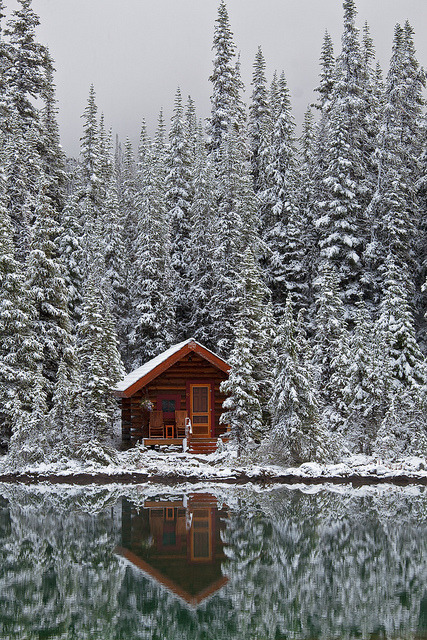
Rustic Cabin of Lake O’Hara Lodge in Snow by Lee Rentz on Flickr.
Rustic Cabin of Lake O’Hara Lodge in Snow by Lee Rentz on Flickr.


Bone-Eating Worms
Lurking deep in the world’s oceans, eyeless, mouthless, stomachless worms feast on the bones of whales and all manner of dead sea creatures. Boneworms, of the genus Osedax, are about 3 centimetres long and were first discovered on a whale carcass in 2002. The worms begin as microscopic larvae that drift through the dark water, using chemical cues to locate carcasses on the sea floor. They settle on the bones and begin to grow: one end grows into feathery appendages that extract oxygen from the water, and the other end grows into root-like appendages that dig a cavity in the bone and insert themselves like tiny blades of grass. Acid-secreting enzymes are abundant in these roots, and the acid breaks down the bone and allows the worm to digest proteins and lipids. However, only females develop to adult size: males are only 1 millimetre and attach themselves to the females for the sole purpose of fertilising her eggs—then the new larvae drift off to find more bones, and the lifecycle begins again. Researchers have determined that there are more than 15 different types of boneworm within the Osedax genus, and have hypothesised that the worms may have evolved 45 million years ago, about the same time as the first open-ocean whales, or 130 million years ago, during the age of the dinosaurs when immense reptiles roamed the seas.
It’s amazing that we can know so much about such a small creature that was discovered so recently.

Multifamily Fundamentals Do Not Face a Cliff
Apartment fundamentals have bounced back robustly since the recession ended in June 2009. Despite middling economic growth, the national vacancy rate dropped sharply from a peak of 8.0 percent at the end of 2009 to 4.6 percent in the third quarter of 2012. Vacancy rates that are this low have not been observed since late 2001.
Asking and effective rents have risen for 11 consecutive quarters and in many areas have surpassed previous peaks achieved in the third quarter of 2008, before the fall of Lehman Brothers. Landlords face little pressure to offer concessions given how tight rental markets are in most places.
Construction also remains tight, with less than 37,000 units coming online over the last three quarters of 2012. An additional 18,000 units are expected to open their doors in the fourth quarter; that adds up to about 55,000 units for the year, a slight increase from 2011 but well below the 125,000 annual average from 2000 to 2009.
(src http://nreionline.com/news/multifamily_fundamentals_no_cliff_11132012/)
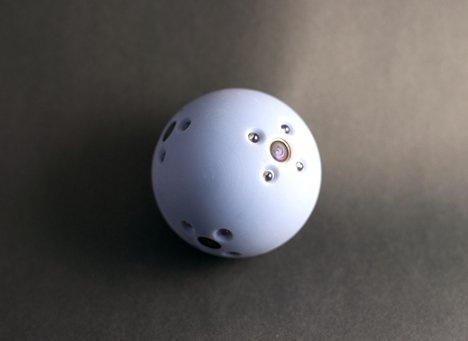
“The Bounce camera is a bouncing ball-shaped device with six embedded cameras. Throw one into a dangerous situation and it snaps two images per second and beams them back to a laptop on the outside. The associated software quickly stitches the images together into a panoramic view of what’s happening inside.”
(http://gajitz.com/bouncy-ball-camera-gives-a-safe-preview-of-dangerous-areas/)


Due to a surplus of stupendously bad children and the ever-increasing price of coal, Santa has been forced to declare bankruptcy. Asked for a quote, Santa had the following to say:
Well, we’ve been trying like heck to avoid this for the past few years but we just can’t ignore the sad truth that this will be our last Christmas.
We just got our latest bank statements and, after reconciling with projected costs through the end of this year, we can’t see a future for Claus, Inc. We considered buyouts, IPOs and taking out a second mortgage on the North Pole but decided we’d rather shut ‘er down than see the old girl fall under outside control either now or in the future.
We’re all terribly sad to see it go this way; it’s been a great ride. We’d like to thank everyone that made it possible for us to stay in business for so long. If anyone knows of a good home for nine immortal reindeer, please let us know.

 danelabonte