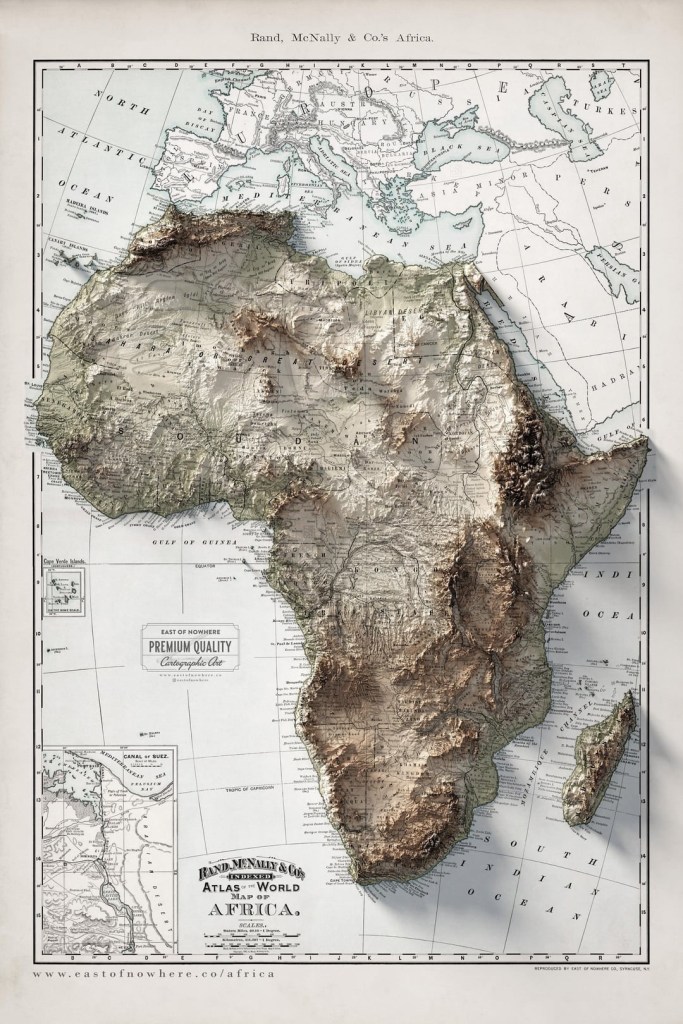
Source (https://reddit.com/r/dataisbeautiful/comments/14ivq1l/oc_the_topography_of_africa)
Zoomable version (https://www.easyzoom.com/imageaccess/613e6664b7db43769ade1405ff36ac2c)
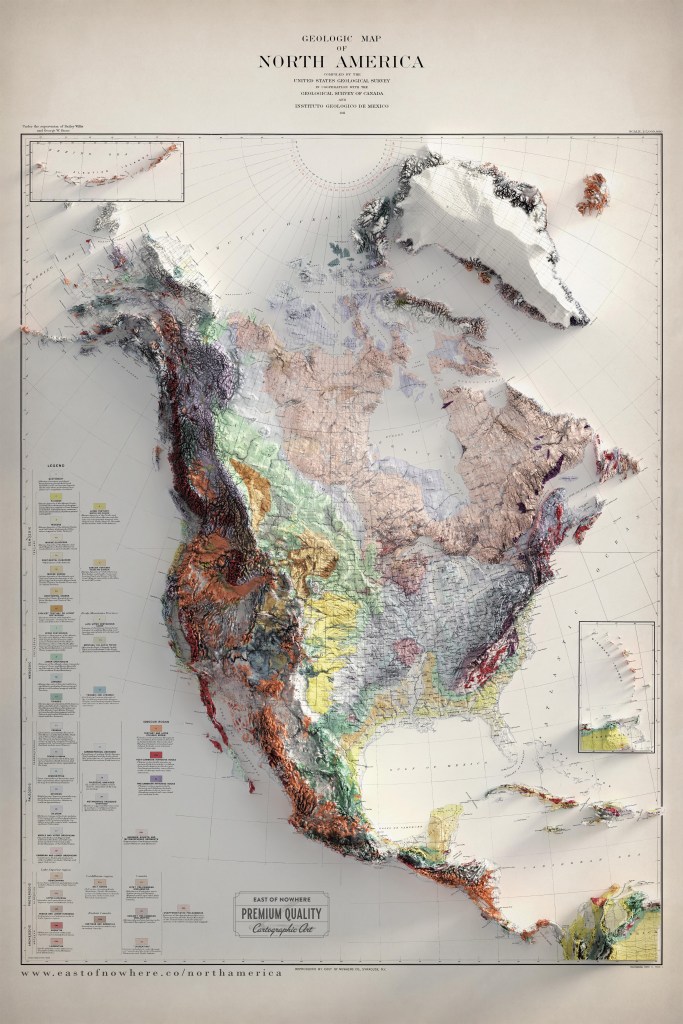
Source (https://eastofnowhere.co/pages/north-america-1911)
Via (https://reddit.com/r/dataisbeautiful/comments/z4u9yr/oc_the_bedrock_geology_of_north_america/)
If you enjoy this, you may also enjoy (https://en.wikipedia.org/wiki/Terrain_cartography)
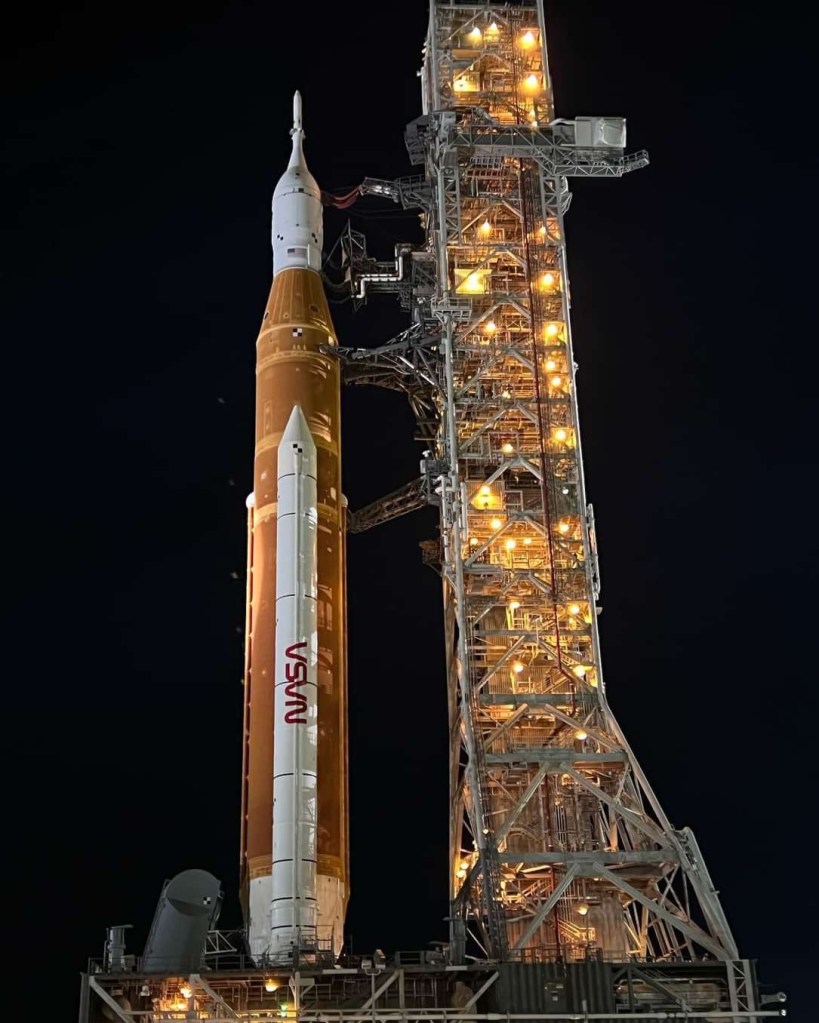
Source (https://reddit.com/r/space/comments/x0d1ci/a_few_pics_of_nasas_artemis_rocket_scheduled_to/)
Originally scheduled to launch today but just delayed a few minutes ago.


“This slice of the vast universe is approximately the size of a grain of sand held at arm’s length by someone on the ground.”
“The combined mass of this galaxy cluster acts as a gravitational lens, magnifying more distant galaxies, including some seen when the universe was less than a billion years old.”
“This image shows the galaxy cluster SMACS 0723 as it appeared 4.6 billion years ago, with many more galaxies in front of and behind the cluster.”
Source (https://webbtelescope.org/contents/news-releases/2022/news-2022-038)
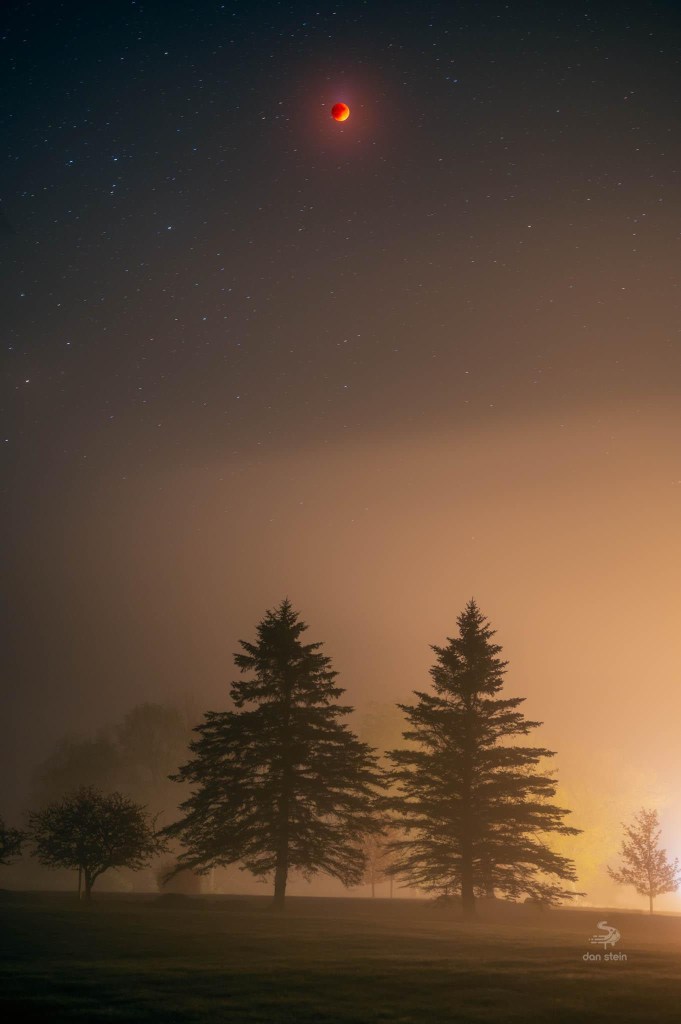
Taken Sunday 15 May 2022 in the Catskills.
“This image is a 2 shot blend. One for the overall shot, and one for the details in the Moon. Taken back to back, no crazy compositing here, think of it like an HDR! Nikon Z6 + Z 50 1.8 S. Both shots ISO 800, f/2.8. Moon shot 0.8 seconds, overall shot 20 seconds.”
Source (https://reddit.com/r/interestingasfuck/comments/uqwno6/_/i8tkl0i)
Photographer (https://www.instagram.com/danieljstein/)

Source image (https://www.instagram.com/p/CIsulkyr9jJ)
By @sipinkaras (https://www.instagram.com/sipinkaras)
Via (https://reddit.com/r/NatureIsFuckingLit/comments/uhwjei/orchid_mantis)
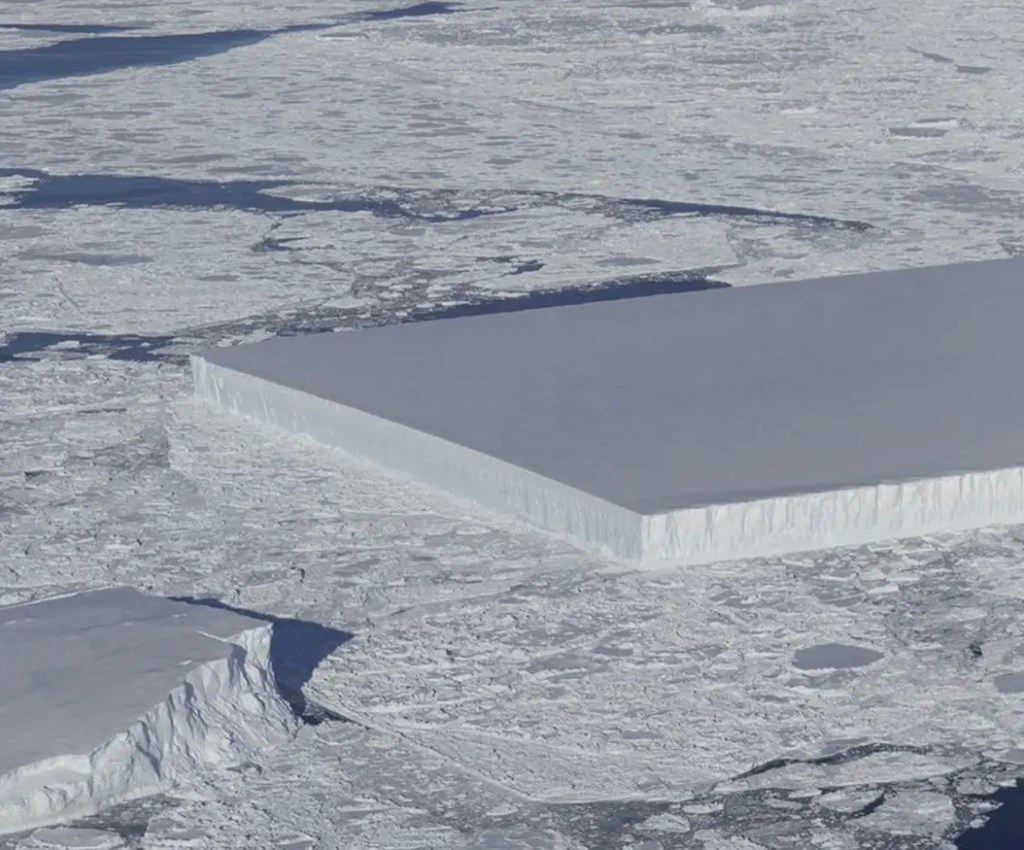
“Icebergs of this shape are called tabular”
“Despite its eerily perfect shape, this iceberg is completely natural, and in fact not even that unusual. Ice has a crystal structure that means it prefers to break along straight lines.”
“In the northern hemisphere, ice sheets sit on bedrock, and the friction between the ice and the ground means icebergs form in the irregular shapes that most of us picture when thinking of an iceberg.”
“In contrast, the edges of the Antarctic ice sheet are mainly made of floating ice shelves. These ice slabs are free to break along their natural crystal structure, resulting in icebergs that often have straight edges and smooth tops.”
Via (https://reddit.com/r/oddlysatisfying/comments/ub4m7x/this_rectangular_iceberg/)
Description (https://theconversation.com/how-a-near-perfect-rectangular-iceberg-formed-105655)
Photos (https://www.flickr.com/photos/nasa_ice/albums/72157702586203404/)
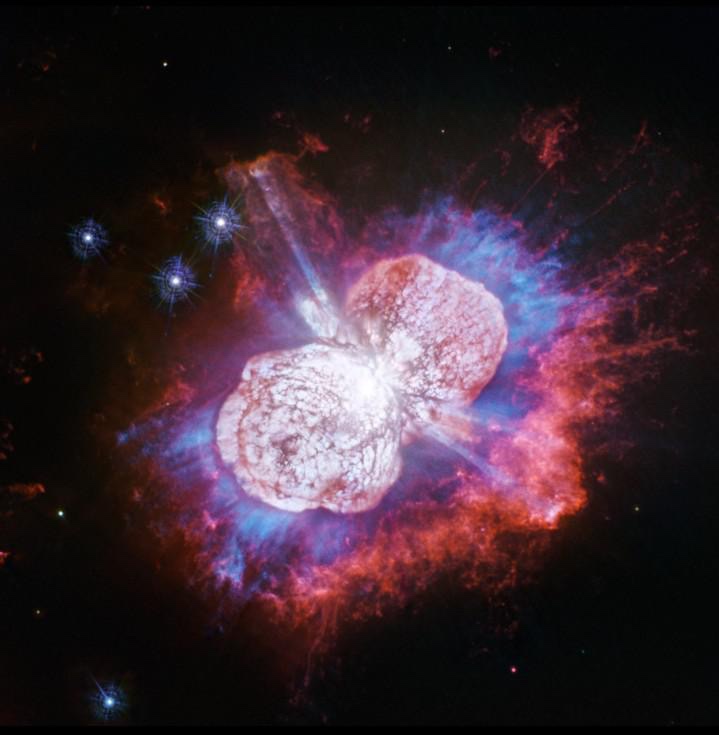
“Eta Carinae … is a stellar system containing at least two stars with a combined luminosity greater than five million times that of the Sun…”
“…it brightened in 1837… marking the start of its so-called “Great Eruption”.
“It became the second-brightest star in the sky between 11 and 14 March 1843 before fading well below naked eye visibility after 1856.
“… a smaller eruption … in 1892 before fading again. It has brightened consistently since about 1940…”
(https://en.wikipedia.org/wiki/Eta_Carinae)
“From the Latin homunculus meaning Little Man, the nebula consists of gas which was ejected from Eta Carinae in 1841.”
“Within the Homunculus is a smaller Little Homunculus, and within that a shell of shocked material from stellar winds that has been called Baby Homunculus.”
(https://en.wikipedia.org/wiki/Homunculus_Nebula)
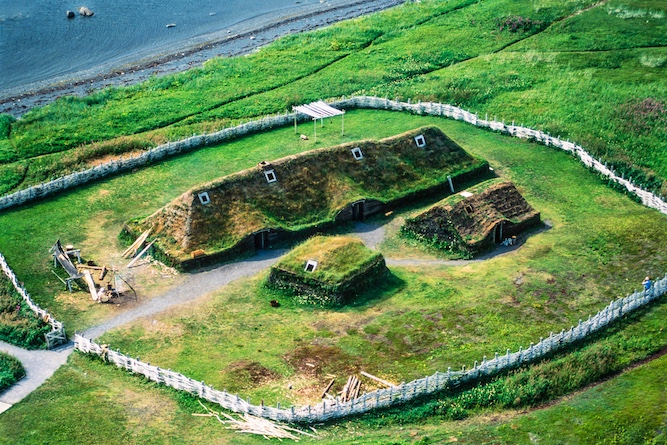
“…the results suggest that the Norse cut down these trees within a few months of each other in 1021.”
“That precision was possible thanks in part to the IntCal20 calibration curve, which is the first radiocarbon calibration curve to break down changes in atmospheric carbon levels into single-year increments.”
“The Norse may have been at the site slightly earlier, but they were definitely there and cutting down trees by 1021.”
(https://arstechnica.com/science/2021/10/vikings-were-in-north-america-by-1021-ce/)
In 1960, L’Anse aux Meadows was discovered “with the assumed historical age of ca AD 1000”.
In the 1970s and 1980s, charcoal was used for radiocarbon dating.
In 2016, “progress in high-precision calibrations of radiocarbon dates has led to evaluations of earlier research” and concluded that “the calibrated age range of L’Anse aux Meadows is AD 975–1020.”
With this new research, we now have an even more definitive date.
 danelabonte