Categories
Current Events Health Humanity

Amy Coney Barrett and the Affordable Care Act

“There’s no argument that’s going to be persuasive enough to shame Senate Republicans to look within themselves and do the right thing.”

“Republicans are also well aware that they’re being hypocrites by violating the precedent they set in 2016 when they refused to consider President Barack Obama’s nominee, Judge Merrick Garland, during an election year.”

“…she will likely be the deciding vote on the Supreme Court in the case to overturn the Affordable Care Act in the middle of a pandemic that has already killed more than 210,000 people in the United States.”

Given Barrett’s record criticizing the 2012 court decision upholding the law, there can be little doubt about how she would vote. She wrote in 2017 that Roberts “pushed the Affordable Care Act beyond its plausible meaning to save the statute.”

Any senator who votes for her will be at least partly responsible for more than 20 million people’s losing their health insurance. And they’ll be responsible for insurance companies’ once again being allowed to discriminate against people with pre-existing conditions.”

(https://www.nbcnews.com/think/opinion/amy-coney-barrett-s-supreme-court-hearing-formality-democrats-have-ncna1242888)

Categories
Current Events Health

America’s death gap

Here’s a jarring thought experiment: If the United States had done merely an average job of fighting the coronavirus — if the U.S. accounted for the same share of virus deaths as it did global population — how many fewer Americans would have died?

The answer: about 145,000.

That’s a large majority [79%] of the country’s 183,000 confirmed coronavirus-related deaths.

No other country looks as bad by this measure. The U.S. accounts for 4 percent of the world’s population, and for 22 percent of confirmed Covid-19 deaths. It is one of the many signs that the Trump administration has done a poorer job of controlling the virus than dozens of other governments around the world.

The specific numbers are only estimates, of course. They are based on virus statistics that are unavoidably incomplete. Most scientists believe the real U.S. death toll is higher than the official numbers indicate, and undercounting of deaths may be even greater in some other countries.

After the U.S., Brazil and Mexico have the next largest gaps between population share and official death share. They are also countries with less advanced medical systems, where some experts think the actual death toll is vastly higher than the official one. If that’s right, the true gaps in Brazil and Mexico may be as large as the U.S. gap.

But no other affluent country has nearly so big a gap. Canada and several European countries each account for a greater percentage of deaths than population, yet the differences aren’t nearly as severe as in the U.S.

And some countries, like Australia and South Korea, have a positive version of the gap. Japan is home to 1.7 percent of the global population but less than 0.2 percent of deaths. An additional 12,000 Japanese residents would not be alive if the country had merely an average death rate.

As I was putting together these numbers, I started thinking about how Americans should have expected their country to fare — above average, below average or maybe right near the average. The U.S. certainly has had some disadvantages in fighting the virus: It’s an international travel hub, which makes transmission more likely, and it had some of the affluent world’s worst health outcomes even before the virus arrived.

On other hand, the U.S. remains the world’s richest country, with vast medical capabilities, and the virus started on a faraway continent. All of which suggests that there was nothing inevitable about the U.S. performance. It is instead a tragic reflection of the country’s failed response.


(https://messaging-custom-newsletters.nytimes.com/template/oakv2?uri=nyt%3A%2F%2Fnewsletter%2F55a5e49d-af65-5d9f-842c-8f0ca369849f)

Categories
Current Events Health Humanity Nature Science

LA Air Quality During COVID Lockdown

Categories
Current Events Health Science

Potential treatment for Lyme disease kills bacteria that may cause lingering symptoms

Screening thousands of drugs, Stanford scientists determined that in mice, azlocillin, an antibiotic approved by the Food and Drug Administration, eliminated the bacteria that causes Lyme disease.

Source (https://med.stanford.edu/news/all-news/2020/03/potential-treatment-for-lingering-lyme-disease.html)

Via (https://scopeblog.stanford.edu/2020/03/30/lyme-disease-bacteria-eradicated-by-new-drug-in-early-tests/)

Categories
Current Events Health Science

Simulating an epidemic

(https://youtu.be/gxAaO2rsdIs)
Categories
Health

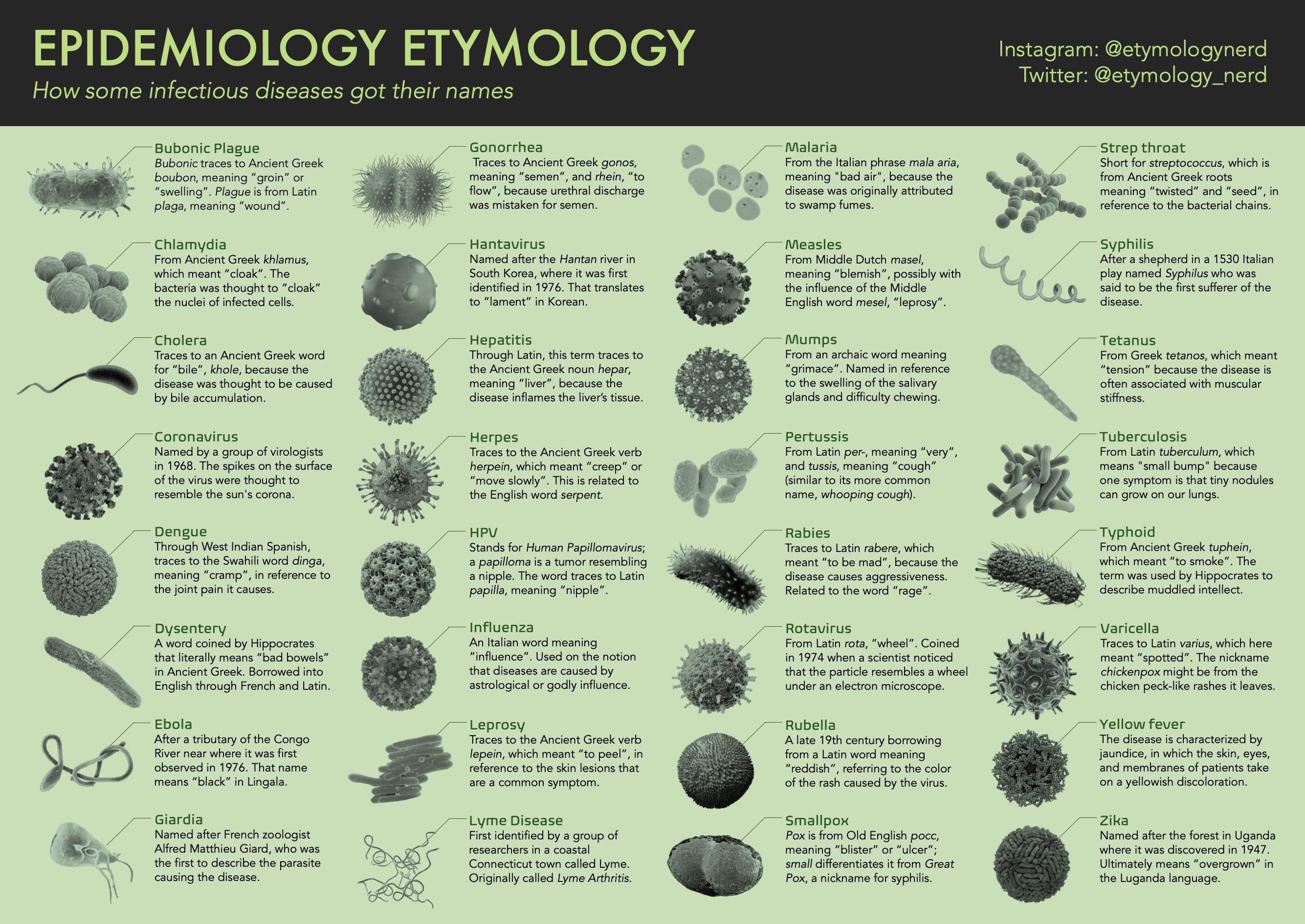
Epidemiology Etymology

(https://twitter.com/etymology_nerd/status/1240972388809965571)

Categories
Design Engineering Health Science

The CityTree

“Different types of moss bind environmental toxins such as particulate matter and nitrogen oxides while producing oxygen at the same time.”

“Controllable ventilation technology allows airflow to be intensified, meaning that the filter effect can be increased as required.”

“Water provision is either connected or independent, thanks to a fully automated irrigation system.”

“Energy is provided via grid connection.”

“Mosses store large quantities of moisture, and the considerably increased evaporation surface creates an immense cooling effect.”

(https://greencitysolutions.de/en/solutions)

Categories
Health

Researchers create new slow-release drug delivery system

Ambika Bajpayee poses for a portrait at the Interdisciplinary Science and Engineering Complex at Northeastern University in Boston, MA on July 09, 2019. Photo by Ruby Wallau/Northeastern University

Ambika Bajpayee, an assistant professor of bioengineering at Northeastern, has been working with Giovani Travero and Robert Langer at the Massachusetts Institute of Technology to design a contraceptive pill that would need to be taken just once per month.”

“Their drug delivery system, described in a recent study in Science Translational Medicine, remains in the stomach for weeks, slowly releasing contraceptives.”

“Their solution resembles a six-armed star, more than two inches across, that is folded into a pill capsule. The arms are loaded with contraceptives mixed with various polymers to slow down their release rate.”

“You need something that can stay inside the stomach for several weeks, but is strong enough that it can withstand the peristaltic wave forces that break down food,” Bajpayee says. “And not degrade in the acidic gastric environment.”

“Once the pill is swallowed, the capsule dissolves and the star unfolds like a flower blooming in the stomach. Its arms are too wide to fit through to the small intestine.”

“Because of its expandable size, it cannot pass through the stomach,” Bajpayee says. “This results in long residence times of three to four weeks, during which contraceptive drugs loaded into the arms of the star are released into the stomach.”

“The star eventually breaks down into small pieces, Bajpayee says. The researchers designed specific areas of the star to dissolve, which allows it to pass easily through the digestive system and out of the body.”

“Loaded with different drugs, the star-shaped delivery system could help other patients whose well-being depends on daily pills, like individuals with HIV or various mental health disorders, as well as those looking for an oral contraceptive that doesn’t have to be taken every day.”

(https://news.northeastern.edu/2019/12/04/this-birth-control-pill-only-needs-to-be-taken-once-per-month/)

Categories
Health

Antibody injection stops peanut allergy for 2 to 6 weeks

“One injection of an antibody treatment let people with severe peanut allergies eat a nut’s worth of peanut protein two weeks later, a small, Stanford-led pilot study showed”

(https://med.stanford.edu/news/all-news/2019/11/antibody-injection-stops-peanut-allergy-for-2-to-6-weeks–study-.html)

Categories
Health

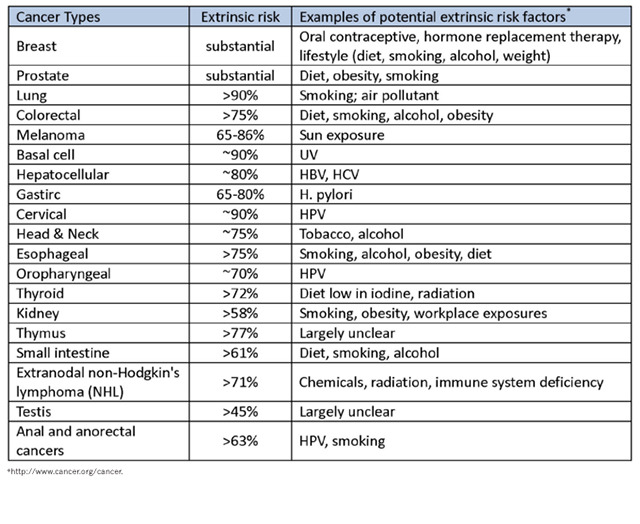
Your lifestyle is to blame for 70 – 90% of cancers

(http://www.marketwatch.com/story/your-lifestyle-is-to-blame-for-70—90-of-cancers-2015-12-17)